← All courses
AI-PLUG: The framework for bringing AI into your company
Course · Method and organization · Level 3
Bring AI into your company in 100 days, with a plan that holds up in front of the board.
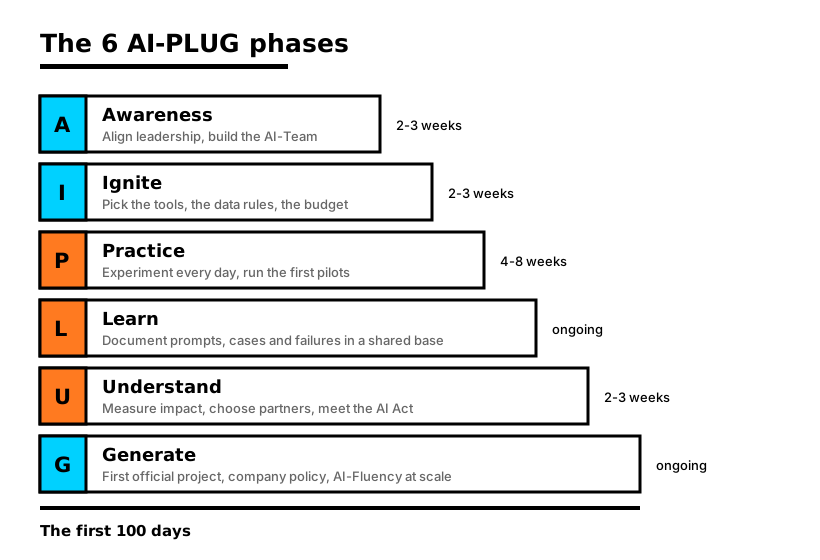
A 100-day plan built on the six AI-PLUG phases, each with a duration you can defend
A data policy and a tool perimeter that survive a conversation with Legal
An AI-Team in place, with the roles it needs and a rhythm people can see
Pilot projects whose success criteria were written down before the work started
The questions to put to a vendor, plus the answers that should make you walk away
Read them in order, because each phase picks up what the previous one produced. A quiz closes every part and tells you whether the decisions are clear.
Why individual enthusiasm goes nowhere, and what a plan does instead. The six phases in short, plus the role of the AI-Team.
Aligning a leadership split between people expecting miracles and people already burned. How the AI-Team is put together, and who stays out of it.
Three decisions open the journey: which tools, which data, which budget. The kickoff workshop and how long each piece takes.
Getting people to experiment for real, every day, until the first pilot is chosen. Handling the skeptic, the frightened, and the one who wants to automate everything.
Turning what works into a base that stays with the company. How a prompt gets documented, and why a failure is worth more than a success.
Measuring impact and carrying it to the board. Assessing a vendor, finding where your data lives, staying inside the AI Act.
The first project that is no longer an experiment. Company policy, and how the method reaches the other teams.
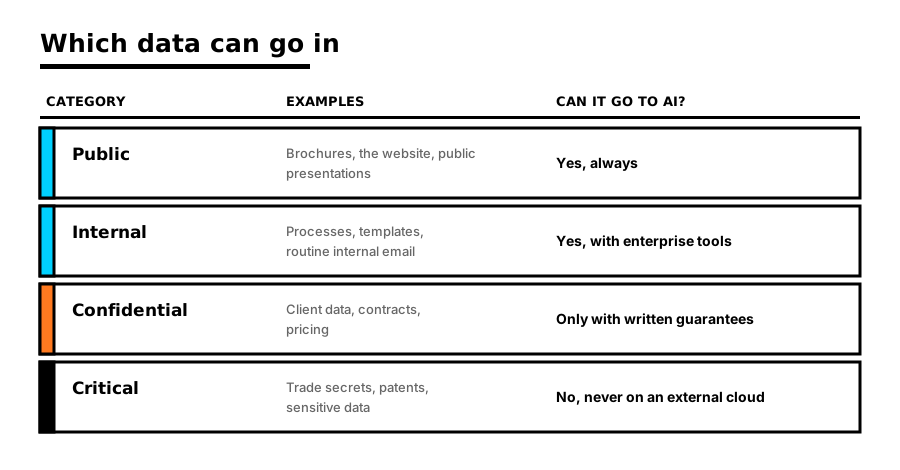
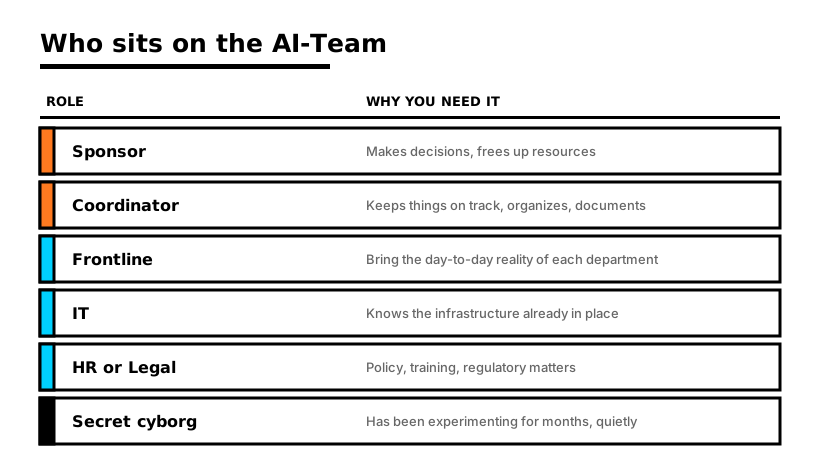
The two templates you fill in during the course.
A manager walks out of a meeting with the CEO and has no idea where to start. Follow him as he aligns leadership, builds the team, picks the tools and closes the first pilot: by your turn, you have already watched it done.
Something written comes out of every phase: the data classification, the pilot structure, the policy outline, the criteria for judging a vendor. You leave with your own documents rather than notes about a method.
Stuck? Ask, in writing or out loud. It answers about the lesson you are on.
5 questions per lesson. At the end you get a course certificate, with the quizzes you passed.
Leadership decided to start, and you were the one named. What you need is a route with phases, durations and results you can show to whoever gave you the mandate.
Your group already exists, and everybody brings a different idea to the meeting. Here you find the working rhythm and the decisions in order, one phase at a time.
An AI mandate, even an informal one. This course talks about company decisions rather than prompts, and assumes you know what AI can do.
33 learning outcomes across 8 competences, in 5 of the 5 areas of the Joint Research Centre framework. You master 12, you consolidate 20, you are introduced to 1. For each one, the mapping says in which lesson and with which test.
Measuring value and leading an AI-Team both get opened here without being finished: that part is completed by AI-Team 2026, out in the field.
The plan is yours. Now the team that runs it has to be trained.

For several people, team licences cost less per person.
If after 5 minutes you have not learned something new, you have lost 5 minutes.
No. Leadership, data, budget and people are what this course is about. There is no code, and the technical part comes down to choosing among ready-made tools.
Yes, and that is where it was built: the route was refined with small and medium Italian companies, workshop after workshop. Phases stay the same, team size changes.
Yes, because that is exactly its starting point. Lesson one explains why scattered experimentation burns out on its own, and what keeps it alive instead.
Seven short parts, in one sitting or spread out, plus the quizzes. The company work the course prepares runs for months. That is the real journey.

Max Turazzini. 3 years of workshops in more than 200 companies, 2,000 people trained. Everything I got wrong bringing AI into companies went into this course, along with the mistakes I watched others make: the method is what survived.
"You learn AI by doing it, by getting it wrong, and by having someone beside you who has been there before."
Start with the free lesson →