← All courses

Vibe Coding for Non-Programmers
Course · Development and coding · Level 2
You describe what you need and the AI builds it. From the first sentence in a chat to an app online with your own data inside, without writing a line of code.
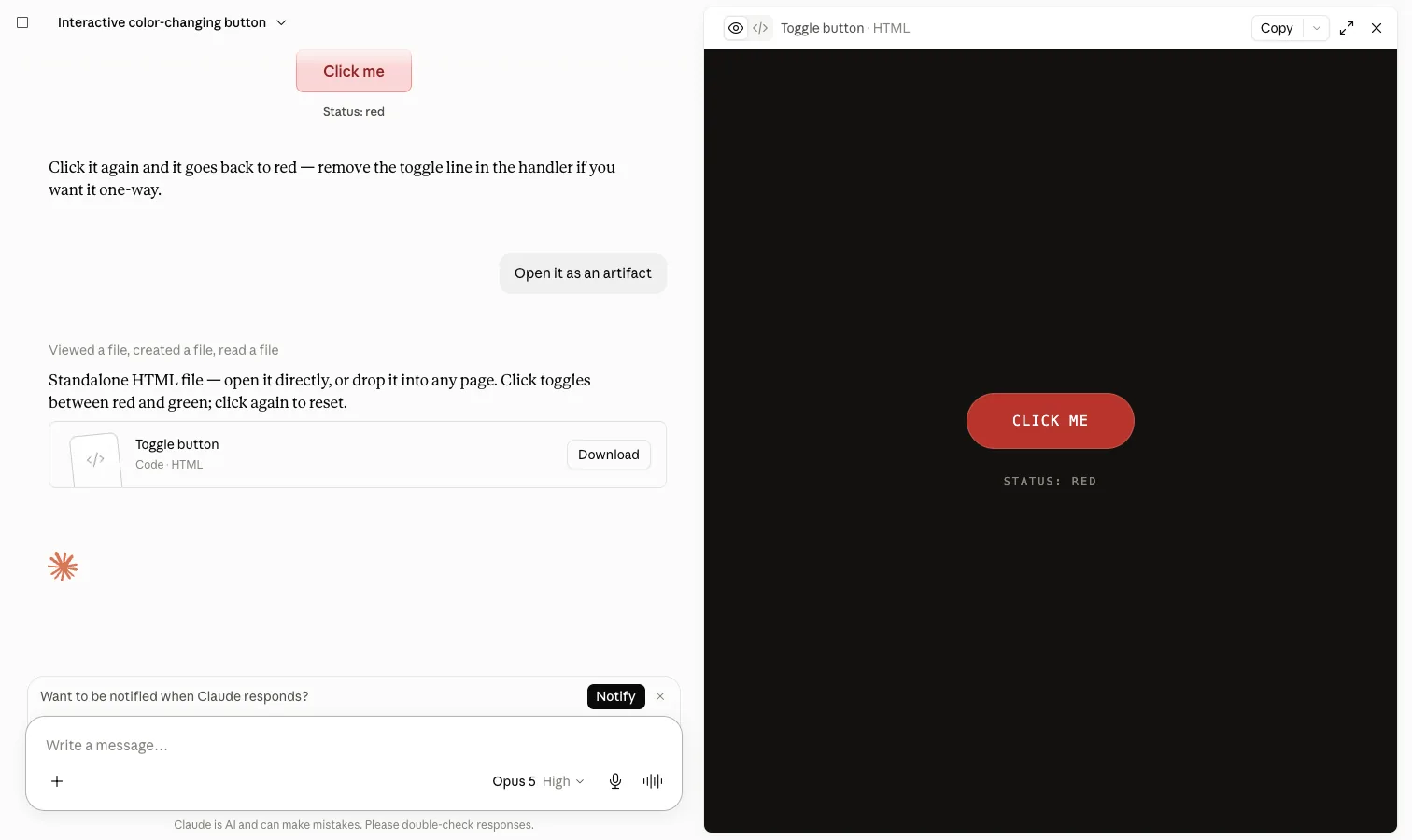
A dashboard built inside a chat, reading your own CSV and showing totals, filters and charts
An app published at a real web address, with a database that remembers what you put in it
A six-step method that works for any idea, from the problem to testing it with colleagues
The habit of reading the code the AI wrote, changing one thing on purpose and understanding an error instead of generating again at random
A prototype the IT team can use as a brief, so the answer comes back instead of the wait
Take them in order, and in each one there is something real to build. A quiz at the end of every lesson tells you whether you can move on.
One sentence in plain English, and a working program appears on screen. Here you also learn why the AI invents something new every time while code does not.
A vague request becomes a prompt that returns what you wanted, and what you built comes out of the chat with you.
Feed it a CSV and get a dashboard with filters and charts. The second half builds an app that fetches real data from outside.
Now you leave the chat and publish. The app gets a web address and a database that remembers.
When it breaks, the symptoms tell you which problem it is, and you know what to write to get it fixed. Stopping is part of the method.
Open the code, read what it does, change one small thing with your own hands without breaking the rest.
The six steps that carry over to any idea, with the templates to fill in while you work.
Present the prototype to people who write software for a living: what holds, what does not, and the answer you get back.
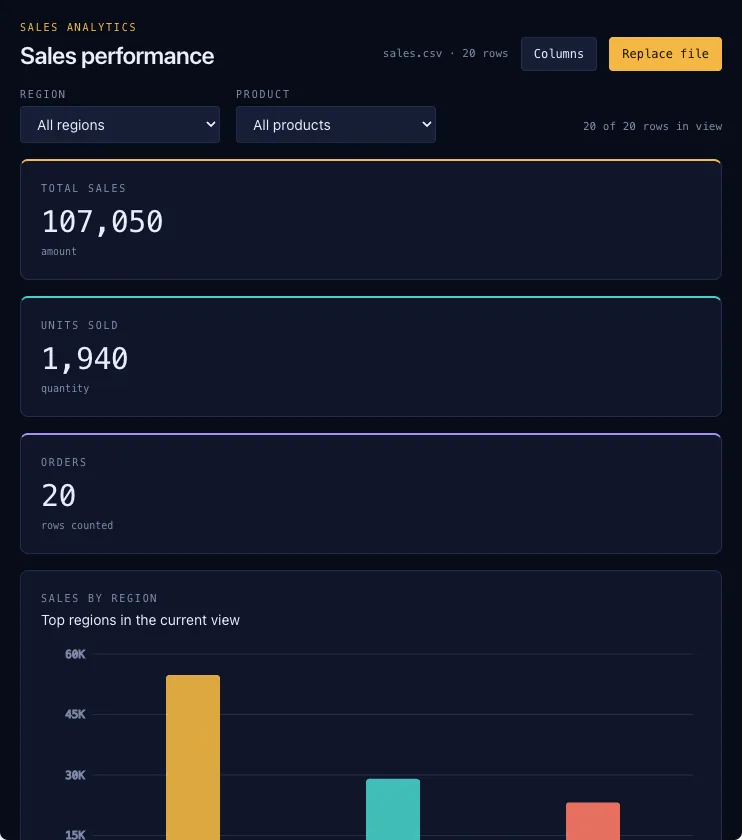
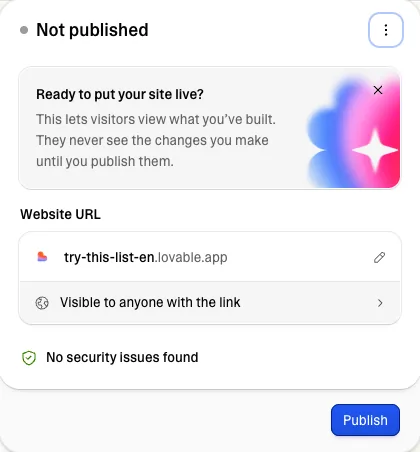
These are two real screens from the course.
You copy it, paste it into your own tool and watch what happens on your own screen. The examples run on Claude, ChatGPT and Lovable, with free accounts.
The dashboard, the published app and the six-step method leave the course with you and you reuse them at work the next day.
Stuck? Ask, in writing or out loud. It answers about the lesson you are on.
4 questions per lesson, 5 in the first, 5 in the second. At the end you get a course certificate, with the quizzes you passed.
You know what would make your work easier, but the request to IT comes back as a form to fill in, or it does not come back at all.
You ask questions and get answers, and you have noticed that making the same request by hand every time is the work you would like to remove.
A free account on Claude or ChatGPT, and one on Lovable from the fourth lesson on. No programming.
32 learning outcomes across 9 competences, in 5 of the 5 areas of the Joint Research Centre framework. You master 17, you consolidate 13, you are introduced to 2. For each one, the mapping says in which lesson and with which test.
For several people, team licences cost less per person.
If after 10 minutes you have not learned something new, you have lost 10 minutes.
No. You describe what you want in plain English and the AI writes the code. In the sixth lesson you learn to read it and change something, but you never write it from scratch.
No. The examples run on the free accounts of Claude or ChatGPT and of Lovable. Paid plans only raise how much you can generate in a day.
The lessons take about two hours to read. If you build everything there is to build, allow three times that, spread out however you like.
It depends, and the last lesson has the checklist that decides. A few users and no sensitive data will hold; as soon as you touch real data or other systems, it goes to IT.

Max Turazzini. 3 years of workshops in more than 200 companies, 2,000 people trained. I have seen too many good ideas die waiting for someone to build them. This course removes the wait.
"You learn AI by doing it, by getting it wrong, and by having someone beside you who has been there before."
Start with the free lesson →